 By Jenna Rose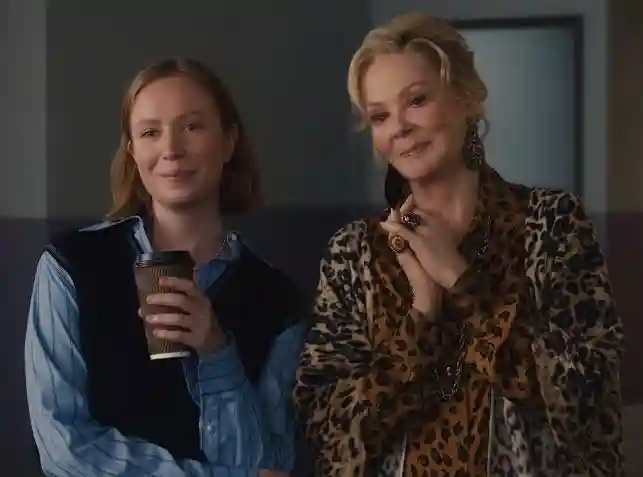
Few television comedies manage to end at exactly the right moment. Even fewer can deliver a finale that feels surprising without betraying everything that came before it. After five seasons of ambition, betrayal, friendship, career battles, personal growth, and plenty of sharp jokes, Hacks managed to do exactly that.
The HBO Max comedy officially came to an end on May 28, 2026, bringing the complicated relationship between legendary comedian Deborah Vance and writer Ava Daniels to its final chapter. Played brilliantly by Jean Smart and Hannah Einbinder, the pair spent five seasons moving between enemies, colleagues, rivals, friends, and something that increasingly resembled family.
The final episode took an unexpectedly serious turn when Deborah revealed that her cancer had spread and that she intended to end her life at an assisted-suicide facility in Europe. For a show famous for its biting humor, the storyline initially appeared almost shockingly dark. Yet the creators used that setup to deliver a finale that was ultimately about the thing at the heart of Hacks from the beginning: the creative relationship between two very different women who make each other better.
The result was an ending that gave fans an emotional goodbye while still feeling unmistakably like Hacks. It also arrived at a remarkable moment for the series, which entered the 2026 Emmy Awards with a record 24 nominations for its final season.
The Final Season Had a Lot to Live Up To
Ending a successful television series is never easy, particularly when the show has developed a passionate audience and a reputation for consistently strong writing and performances.
Hacks had already collected 12 Emmy wins before its final season, including Outstanding Comedy Series in 2024. That made the fifth season more than just another chapter. It was the final opportunity for the cast and creative team to bring Deborah and Ava’s story to a satisfying conclusion.
The show’s creators, Lucia Aniello, Paul W. Downs, and Jen Statsky, had reportedly envisioned the basic destination of the series years before the finale actually aired. According to the creators, the final scene had been part of their plans since the early stages of the show.
That long-term planning helped the ending feel intentional rather than rushed.
Instead of inventing one last dramatic conflict simply to create a big finale, Hacks returned to the emotional question that had driven the series all along: What happens when two people who could not be more different discover that they genuinely need each other?
The Surprise Ending Completely Changed the Mood
The finale begins with Deborah and Ava seemingly in very different places from where they started.
Ava is directing her own television pilot, stepping into a position of authority and responsibility. Deborah, meanwhile, has opened her casino and appears to have achieved another major professional victory.
For a moment, it seems like the show might be preparing to give its characters the celebratory ending viewers would expect.
Then everything changes.
Deborah tells Ava that doctors were unable to completely remove her cancer and that it has spread. Rather than undergo treatment, Deborah has decided that she wants to travel to Europe and visit an assisted-suicide facility.
The revelation is devastating partly because Deborah is normally the character who controls everything. She controls her career, her public image, her relationships, her business decisions, and even the people around her.
Now she is confronted with something she cannot negotiate with.
The creators have explained that this was central to the meaning of the finale. Deborah has spent the entire series trying to control her circumstances, so the idea that she would attempt to control even the circumstances of her death is completely consistent with her personality.
But the story was never really about whether Deborah would die.
It was about whether she still had a reason to live.
Ava Refuses to Let Deborah Give Up
Ava’s reaction is one of the most emotional aspects of the finale.
Throughout the series, Ava has often challenged Deborah, sometimes because she disagrees with her and sometimes because she believes Deborah is treating people badly. Their arguments have been one of the main sources of comedy, but underneath all of that conflict has been a genuine bond.
By the final season, Ava is no longer simply Deborah’s young writer.
She has become her friend.
That makes the news of Deborah’s decision almost impossible for Ava to accept.
Instead of simply agreeing with Deborah’s wishes, Ava spends the journey trying to convince her to reconsider. The dynamic reverses some of the show’s earlier power structure. Deborah once seemed like the person who had all the answers, while Ava was the inexperienced young writer trying to find her place.
In the finale, Ava becomes the person fighting for Deborah.
That reversal demonstrates just how much their relationship has changed over five seasons.
The Paris Trip Becomes Something Much Bigger
The European trip initially appears to be a farewell journey.
Deborah wants Ava to accompany her, and the two women spend time together as they travel toward the assisted-suicide facility. Yet the trip gives them something they have always had when they are together: the opportunity to create comedy.
One particularly important moment comes when Deborah and Ava are eating pastries before continuing their journey.
As they talk and joke, the familiar rhythm between them begins to return.
They are not talking like a boss and employee anymore. They are not even arguing like rivals.
They are simply two comedians working through an idea.
And that becomes the turning point.
Deborah comes up with a joke that reminds her of why she loves performing and creating comedy in the first place. The moment makes her realize that she is not ready to stop.
She may not know exactly how much time she has left, but she knows there is still another story she wants to tell.
More importantly, she wants Ava to help her tell it.
The Real Ending Was About Comedy
This is where the finale becomes much more than a story about cancer or mortality.
Hacks has always been a show about comedy as a profession, but it has also been about comedy as a way of understanding life.
Deborah uses jokes to survive difficult experiences. Ava uses writing to process her own frustrations and insecurities. Their arguments often become material. Their personal experiences become professional opportunities.
Even when they are at their worst, they understand something about each other that other people do not.
The finale ultimately brings them back to that creative connection.
Rather than ending with Deborah walking away from comedy forever, the series concludes with the possibility of another comedy special. Deborah chooses treatment and decides that she still has more work to do.
The surprise is not that she survives.
The surprise is that she finds a reason to keep living.
And that reason is deeply connected to Ava and to the creative work they do together.
Why the Ending Works So Well for Deborah
Deborah Vance has always been a complicated character.
She can be selfish, ruthless, manipulative, funny, generous, insecure, ambitious, and deeply caring, sometimes within the same episode.
A conventional happy ending might not have suited her.
Giving Deborah a perfect retirement would have felt too easy. Having her die would have been dramatically powerful but potentially inconsistent with the show’s underlying optimism.
Instead, the writers gave her something much more fitting.
They gave her another goal.
Deborah does not suddenly become a different person. She does not stop being ambitious. She does not become completely selfless. She remains Deborah Vance.
What changes is her understanding of what is worth fighting for.
After spending years trying to become more successful and powerful, she discovers that the thing she truly wants is another opportunity to create.
That is a much more satisfying conclusion for a character whose identity has always been connected to performing.
Ava’s Ending Is Just as Important
Ava’s journey is equally significant.
When the series began, she was a young writer whose career was struggling. She was talented but inexperienced, confident but often insecure, and convinced that she understood the entertainment industry better than she actually did.
Working with Deborah forced her to grow.
Ava learned about writing, performing, business, power, compromise, ambition, and the complicated ethics of working in Hollywood.
Most importantly, she learned that being talented is not enough.
By the finale, Ava is directing her own pilot and has become a successful creative force in her own right.
Yet she has not simply replaced Deborah.
That is an important distinction.
The show never suggests that Ava needs to become the next Deborah Vance. Instead, Ava develops her own identity while maintaining the creative partnership that helped shape her.
The final relationship between the two women is therefore not about one replacing the other.
It is about two generations of comedians learning from each other.
The Supporting Characters Also Get Their Moments
Hacks would not have worked without its supporting cast, and the finale gives several of those characters satisfying conclusions.
Jimmy and Kayla’s storyline, for example, takes them back into the complicated world of entertainment management. After discovering questionable business practices involving AI likenesses of deceased clients, they use that information to take control of Latitude.
Their ending provides another example of the show’s larger themes surrounding Hollywood, creativity, power, and technology.
Jimmy has always genuinely cared about helping artists make good work. His idealism can sometimes make him look naive, but the finale allows that quality to become a strength.
The series also gives Marcus a meaningful conclusion. His work on the Diva hotel is celebrated, and Deborah acknowledges his contribution.
These smaller character moments matter because they make the finale feel like a goodbye to the entire world of Hacks rather than simply an ending for Deborah and Ava.
The Finale Also Looked at Hollywood’s Changing Future
Another reason the final season felt particularly relevant was its willingness to address the changing entertainment industry.
Hacks has never been afraid to make fun of Hollywood, but it has also shown genuine affection for the people who work in it.
The fifth season explored issues involving artificial intelligence, creative control, corporate power, and the increasingly complicated relationship between artists and technology.
The series’ approach was not simply to say that Hollywood is terrible.
Instead, Hacks recognized that the industry can be ridiculous and exploitative while still being filled with people who genuinely love storytelling.
That idea comes through strongly in Jimmy’s storyline.
It also connects directly to Deborah and Ava’s relationship. Despite everything they have been through, their ultimate goal remains simple: make something funny and meaningful.
Why Ending After Five Seasons Was the Right Decision
One of the smartest decisions the creators made was knowing when to stop.
Many successful shows continue long after their central story has naturally ended. Characters are given increasingly complicated problems simply to keep the series going.
Hacks avoided that trap.
The creators have said they always envisioned the show as a five-season story, and that plan allowed them to build toward a specific conclusion rather than endlessly extending the characters’ conflicts.
That does not mean there were no more stories that could have been told.
There were.
But the fact that more stories were possible does not mean they needed to be told.
The final season gave Deborah and Ava a destination. It allowed their relationship to evolve naturally and ended with the possibility of continued creativity rather than another dramatic cliffhanger.
From Series Finale to Emmy History
The timing of the finale could hardly be more significant.
After five seasons, Hacks entered the 2026 Emmy Awards with a record 24 nominations for a comedy series’ final season. The show is competing against major comedy contenders, including Apple TV’s Widow’s Bay, which has emerged as a significant competitor during this year’s awards season.
Jean Smart is also pursuing an extraordinary achievement.
If she wins Outstanding Lead Actress in a Comedy Series for the final season, she would become the first performer to win the acting award for the same character in every season of a television show’s run. That would make Deborah Vance’s final season even more remarkable.
It is difficult to imagine a more appropriate moment for the show to receive recognition.
Hacks has spent five seasons examining what it means to survive in entertainment, especially when the industry constantly tells people that they are too old, too young, too difficult, too inexperienced, or no longer relevant.
The series itself has now become an example of longevity.
Jean Smart’s Performance Made Deborah Unforgettable
A huge part of Hacks’ success comes down to Jean Smart.
Deborah Vance could easily have become a caricature of an aging comedian. Instead, Smart gave her layers.
She made Deborah intimidating without making her completely unlikeable. She could deliver a cruel line and make the audience laugh, then turn around and reveal a moment of vulnerability that changed how the audience understood her.
The finale required Smart to balance comedy and serious emotion without allowing either side to overwhelm the other.
That is particularly difficult in a comedy series.
The cancer storyline could have turned Hacks into a completely different kind of show. Instead, Smart kept Deborah recognizable throughout it.
She was still funny.
She was still stubborn.
She was still determined to control her own destiny.
And ultimately, she was still a comedian.
Hannah Einbinder’s Ava Completed the Story
Hannah Einbinder’s performance as Ava was just as important to the show’s success.
Ava began as a younger writer who frequently clashed with Deborah. Over time, Einbinder allowed audiences to see the character mature without losing her sarcasm, awkwardness, or independent personality.
The relationship between Ava and Deborah became the emotional center of the series.
Their friendship was never simple.
They hurt each other. They competed with each other. They betrayed each other. They walked away from each other.
But they always found their way back.
The finale works because it recognizes that complicated relationships do not have to become perfect to become meaningful.
Deborah and Ava never stop being themselves.
They simply learn how to be themselves together.
A Finale That Feels Like a Beginning
The most satisfying thing about the Hacks finale may be that it does not feel completely final.
Yes, the series is over.
But Deborah and Ava’s creative partnership is not presented as something that has reached its natural expiration date. Instead, it feels as though their story is continuing somewhere beyond the screen.
That is a difficult balance for a series finale.
The audience needs closure, but too much closure can make the ending feel artificial.
Hacks found a middle ground.
The characters reached meaningful destinations, but life itself remains open-ended.
That is especially appropriate for a show about comedy, because comedians rarely stop creating simply because one project ends.
Why Hacks Will Be Remembered
Hacks arrived as a sharp comedy about an aging Las Vegas comedian and a young writer. Over five seasons, it became something much larger.
It explored ageism, sexism, friendship, ambition, generational differences, creative ownership, celebrity culture, and the strange emotional cost of working in entertainment.
But underneath all those themes was a simple idea.
People can change each other.
Deborah gave Ava confidence and opportunities. Ava challenged Deborah to confront parts of herself she would rather ignore. They became better writers because of one another, but they also became better people.
The final episode understood that the most important thing about their relationship was never whether they were friends, coworkers, or rivals.
They were collaborators.
And collaboration is what ultimately saved them.
The Perfect Goodbye for a Remarkable Comedy
The Hacks series finale took a risky path.
It introduced cancer, mortality, and assisted suicide into a comedy that had spent years balancing serious subjects with outrageous humor. For a moment, it seemed possible that the series might end on an unusually tragic note.
Instead, the creators turned the darkness into a celebration of creativity.
Deborah chooses to keep going.
Ava chooses to stand beside her.
And the two return to the thing that brought them together in the first place: comedy.
That is why the ending works.
It is emotional without becoming sentimental. It is surprising without feeling forced. Most importantly, it respects the characters that audiences have spent five seasons getting to know.
As Hacks heads into a potentially historic night at the 2026 Emmy Awards, its final season has already secured a place in television history with its record 24 comedy nominations. Whether the show adds more trophies to its collection remains to be seen, but its legacy is already secure.
For a series about staying relevant in an industry that is always looking for the next big thing, Hacks ended by proving that some stories become more valuable with time.
And in the end, Deborah Vance did not need one last grand comeback.
She just needed one more joke.
 Nat Feury